
Choosing the Right Wall for Your Property
Retaining Walls in Hastings for preventing soil erosion and supporting grade changes across your property
Terry and Dan McKinney Poured Walls builds retaining walls that hold back soil, redirect water flow, and stabilize slopes across residential and commercial properties in Hastings. You need this type of structure when your yard slopes toward your foundation, when runoff threatens driveways or walkways, or when you're creating usable outdoor space on uneven terrain. The walls we install manage pressure from soil, moisture, and freeze-thaw cycles common to Michigan winters, preventing the type of failure that leads to sinkholes, washout, or structural damage to nearby buildings.
The material you choose affects how long your wall lasts, how much weight it can hold, and how often you'll need to address repairs. Wood retaining walls cost less upfront and work well for low-height garden borders or decorative applications, but they require treatment every few years and typically begin to decay within ten to fifteen years depending on moisture exposure. Concrete block systems provide structural strength, allow for modular design, and handle taller installations when reinforced with rebar and proper backfill, but the finished look depends heavily on the quality of the block and the precision of the installation. Poured concrete delivers the highest load-bearing capacity, resists soil pressure without shifting, and requires almost no maintenance once cured, making it the most practical choice for walls over four feet or areas with heavy clay soil that expands when wet.
If you're planning a retaining wall project in Hastings, we can assess your site and recommend a material that fits your budget, your property conditions, and how you intend to use the space.
How Poured Concrete Retaining Walls Are Built
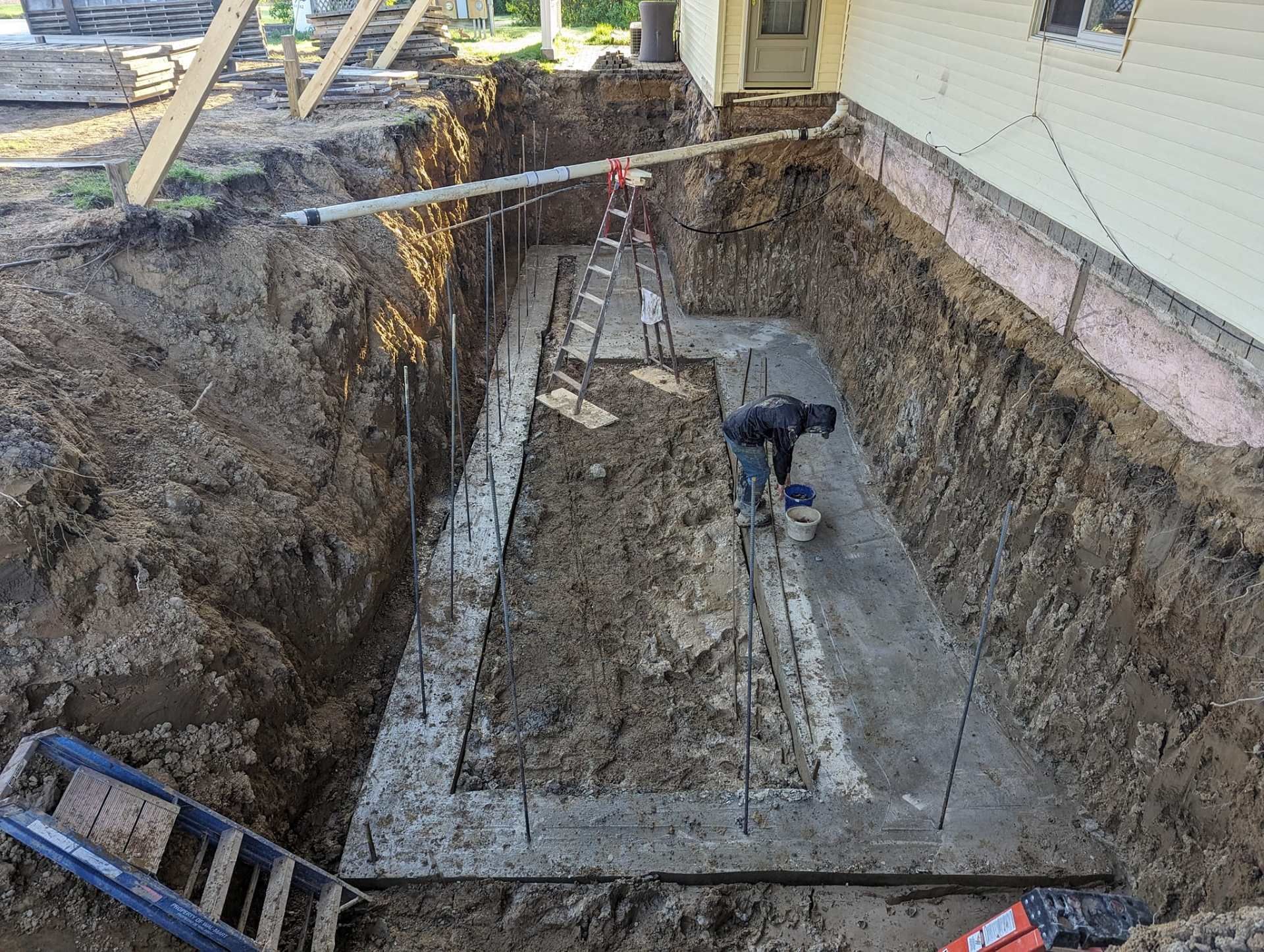
The process begins with excavation to establish a level footing below the frost line, then placement of rebar and formwork before the pour. You will see steel extending vertically from the footing into the wall cavity, which ties the structure together and allows it to resist soil pressure from behind. Once the concrete cures, the forms are stripped, and a drainage system is installed along the back of the wall, typically using perforated pipe and gravel fill to prevent hydrostatic pressure buildup.
After completion, the ground behind the wall stays in place even during heavy rain, and the grade remains consistent without washing downhill. Terry and Dan McKinney Poured Walls designs each wall to carry the specific load conditions of the site, accounting for soil type, slope angle, and anticipated water movement. The surface can be left smooth or finished with texture, depending on your preference and how the wall integrates with adjacent hardscaping or landscaping.
This type of wall requires careful attention to drainage and footing depth. It is not suitable for decorative applications where appearance outweighs structural need, and it does not replace foundation underpinning or crack repair work. The focus here is on managing earth retention and preventing movement over the life of the structure.
Questions Property Owners Ask Before Starting
The following questions come up frequently when planning a retaining wall project, especially when deciding between materials or determining what the site will require.
What makes poured concrete different from block retaining walls?
Poured concrete forms a single continuous structure with embedded steel reinforcement, while block walls rely on interlocking units and mortar joints that can shift or separate under sustained lateral pressure.
How deep does the footing need to go?
The footing must extend below the frost line to prevent heaving, which in many regions means a depth of at least 36 inches, though this varies depending on local conditions and soil composition.
Why is drainage important behind the wall?
Water that collects behind a retaining wall adds pressure and can cause cracking or tipping, so a gravel layer and perforated pipe are installed to direct moisture away from the back of the structure.
How tall can a retaining wall be built?
Height depends on the load behind the wall and the engineering required, but most residential walls range from three to six feet, with taller walls requiring additional reinforcement and sometimes tiered construction.
When should you use concrete instead of wood?
You should use concrete when the wall needs to last more than twenty years, when the slope is steep, or when soil conditions make rot or insect damage likely, all of which are common issues and similar areas.
Terry and Dan McKinney Poured Walls works with property owners who need durable soil retention systems that will perform reliably over decades. If your site has grade changes that are affecting drainage, usability, or soil stability, contact us to review the layout and determine what kind of wall structure will work best.