
Footings That Distribute Weight Below Your Walls
Footing Installation in Hastings for new construction requiring stable base support before foundation walls can be poured
Terry and Dan McKinney Poured Walls installs reinforced concrete footings for homeowners and builders in Hastings who need a solid base to distribute structural loads across the soil before foundation walls are formed and poured. You need this service at the beginning of any foundation project, after excavation is complete and before vertical wall construction can proceed.
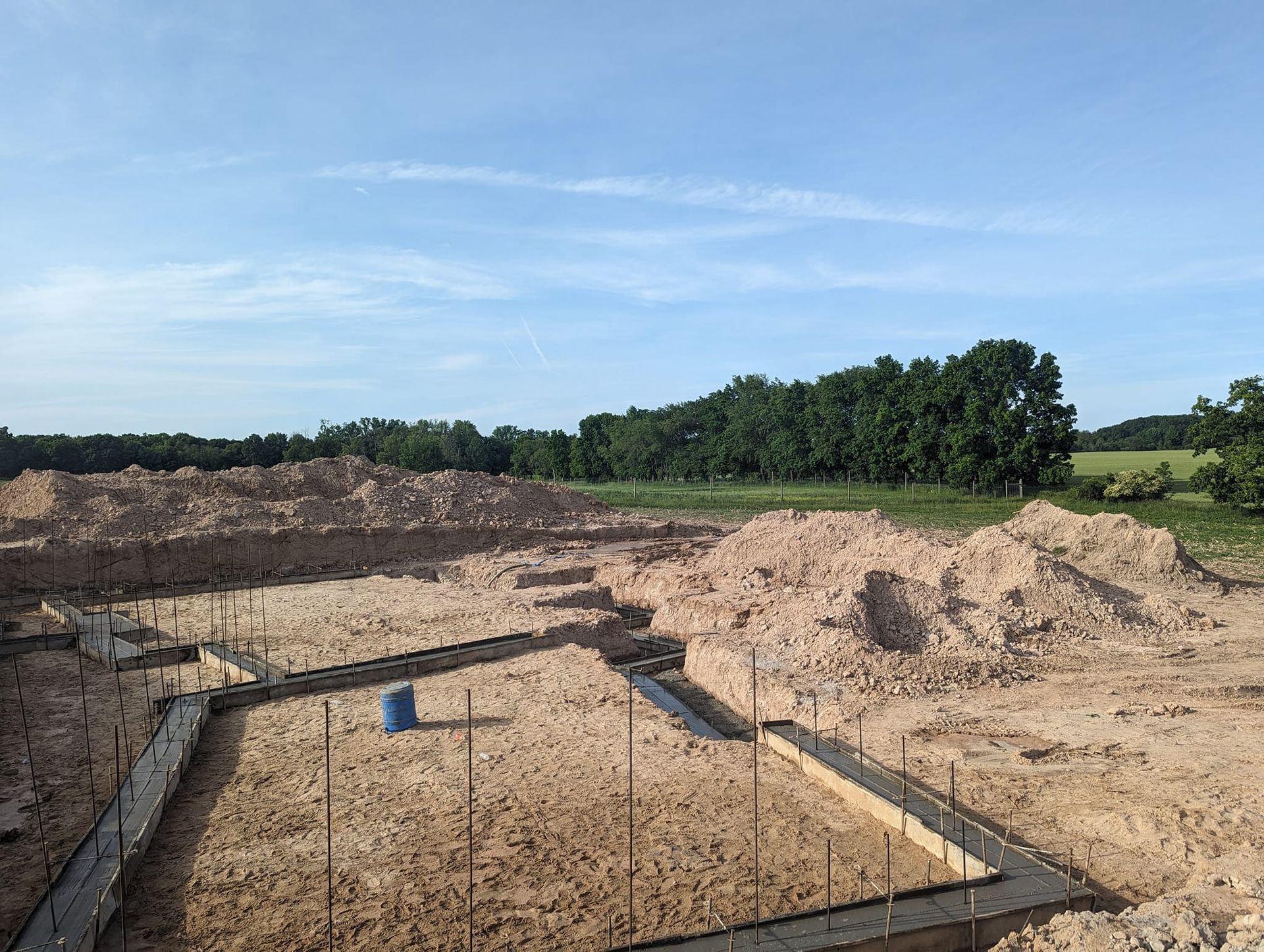
Footings are wider than the walls they support, spreading the weight of the building over a larger area to prevent settling and movement. Steel rebar is placed horizontally within the footing to resist cracking and improve long-term stability. Properly installed footings anchor the entire foundation system and ensure that walls remain level and plumb as the soil beneath compacts and shifts over time.
If you are starting a new home, garage, or addition in Hastings and the excavation is ready for footer work, reach out to confirm your footing dimensions and pour schedule.
Why Footings Must Be Poured Before Walls
After the excavation is complete, the trench bottom is leveled and compacted to provide a stable surface for concrete placement. Forms or trench edges define the width and depth of the footing, and rebar is positioned along the length to reinforce the concrete. Concrete is poured continuously to avoid cold joints, and the top surface is leveled and smoothed to provide a flat base for wall forms.
Once the footing cures, you will see a solid, level concrete base extending below the frost line and wider than the foundation walls that will rest on top. The footing provides bearing surface and prevents the walls from sinking into the soil under load. Terry and Dan McKinney Poured Walls ensures footings are placed accurately and allowed to cure properly before wall forming begins, so your foundation system performs as designed.
This service does not include excavation, grading, or inspection coordination. The excavation must be complete, the trench bottom must be level and compacted, and the site must be accessible to concrete trucks. If your project includes stepped footings due to sloped terrain, those transitions are planned before the pour to maintain consistent bearing capacity across the foundation perimeter.
What Builders and Homeowners Ask About Footings
Contractors and homeowners in Hastings often have questions about footing width, depth, and curing time before moving forward with foundation wall construction.
What width should footings be for a residential foundation?
Footing width is typically twice the width of the wall it supports, but your engineer will specify the exact dimension based on soil bearing capacity and building load.
How deep must footings be to prevent frost heave?
Footings in Hastings must extend below the frost line, typically 42 inches or deeper, to prevent movement caused by freezing and thawing soil.
Why is rebar placed inside footings?
Steel reinforcement prevents cracking caused by soil settlement and helps the footing act as a rigid beam that resists bending under load.
When can foundation wall forms be set after the footing is poured?
Forms can usually be set within 24 to 48 hours after the footing pour, once the concrete has gained enough strength to support the weight of the forms and the wet concrete that will follow.
What happens if the footing trench fills with water before the pour?
Standing water must be removed and the trench bottom must be dry and stable before concrete placement, or the footing will lose strength and fail to provide adequate support.
Terry and Dan McKinney Poured Walls provides footing installation for new homes, additions, garages, and outbuildings in Hastings. Contact the team to schedule your footing pour and confirm site readiness before construction begins.